Packet Radio with Commodore 64
How the Classic Gets Back on the Air Thanks to DIGICOM>64
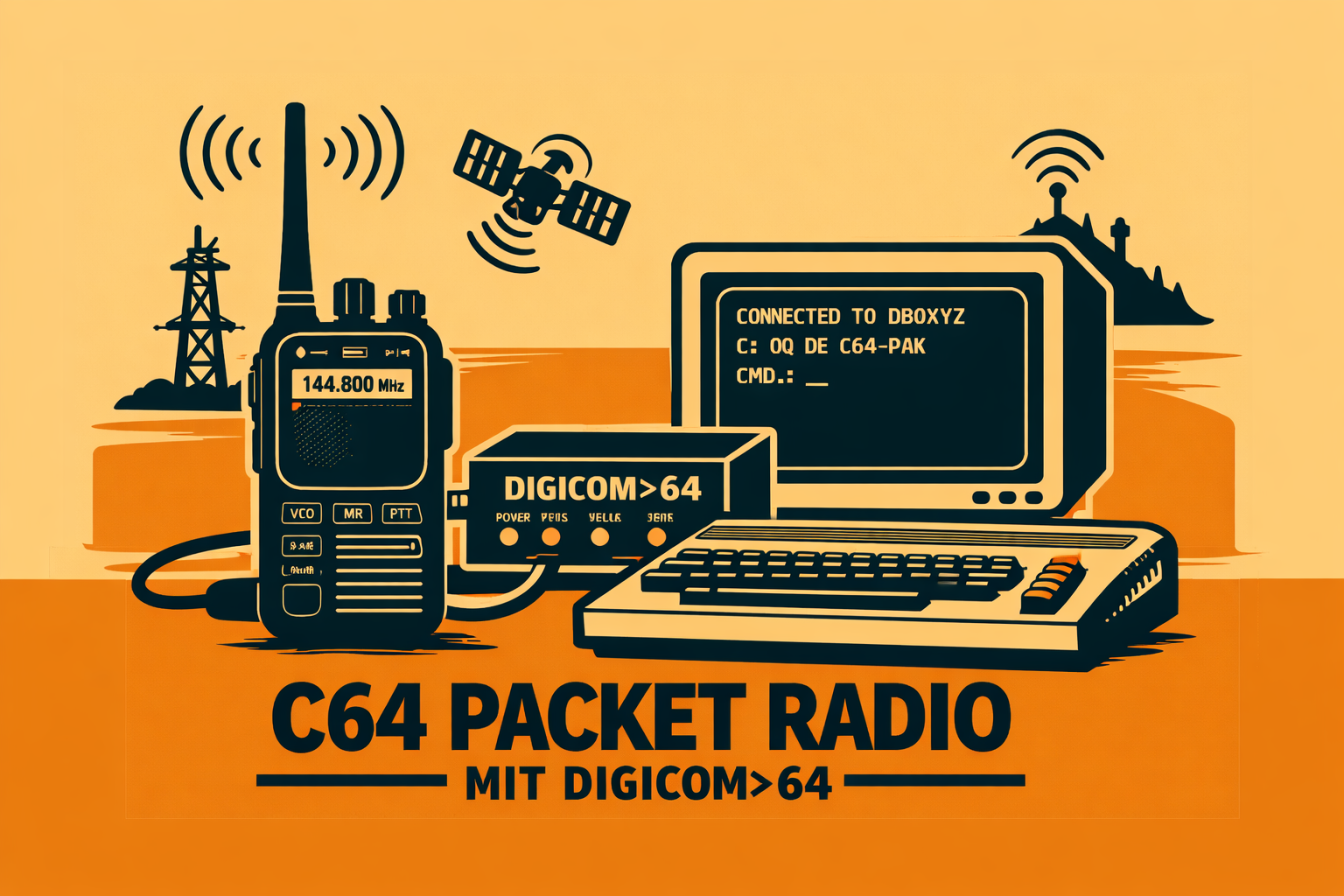
The Commodore 64 is, for many people today, primarily a retro computer that evokes nostalgia and childhood memories. But beyond games and demo scene art, the C64 can also achieve fascinating things - for example in amateur and CB radio. With the DIGICOM>64 hardware and its accompanying Digicom Terminal Software, the “Brotkasten” can be transformed into a fully functional packet radio terminal.
What is Packet Radio?
Packet radio is a digital transmission method used in amateur and CB radio, in which data is sent and received over the air in small packets. It became particularly well-known in the 1980s and 1990s. Through radio, users could send messages, access mailboxes, and exchange files - all without a telephone line.
DIGICOM>64 - The Hardware
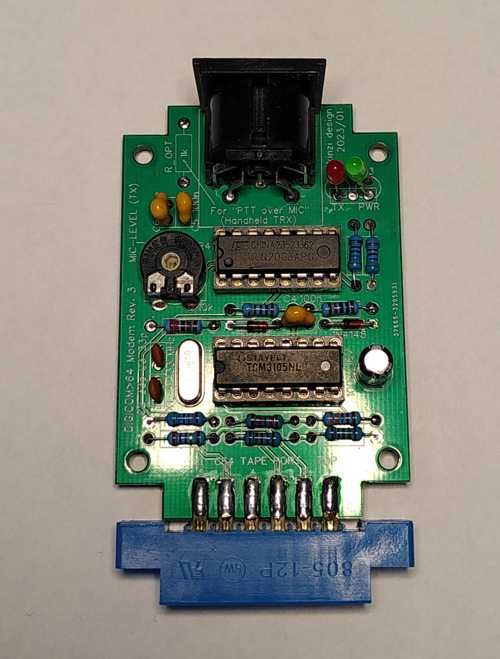
For the C64 to understand packet radio, it needs a Terminal Node Controller (TNC)– like interface. This is where the DIGICOM>64 hardware comes into play. The interface is connected to the C64’s user port and takes over tasks such as:
- Modulation and demodulation of 1200-baud AFSK signals
- Interfacing with the radio (PTT control, audio in/out)
- Error correction and packet-oriented data transmission
In contrast to external TNCs, DIGICOM>64 works closely together with the software on the computer.
Digicom Terminal Software - The Control Center
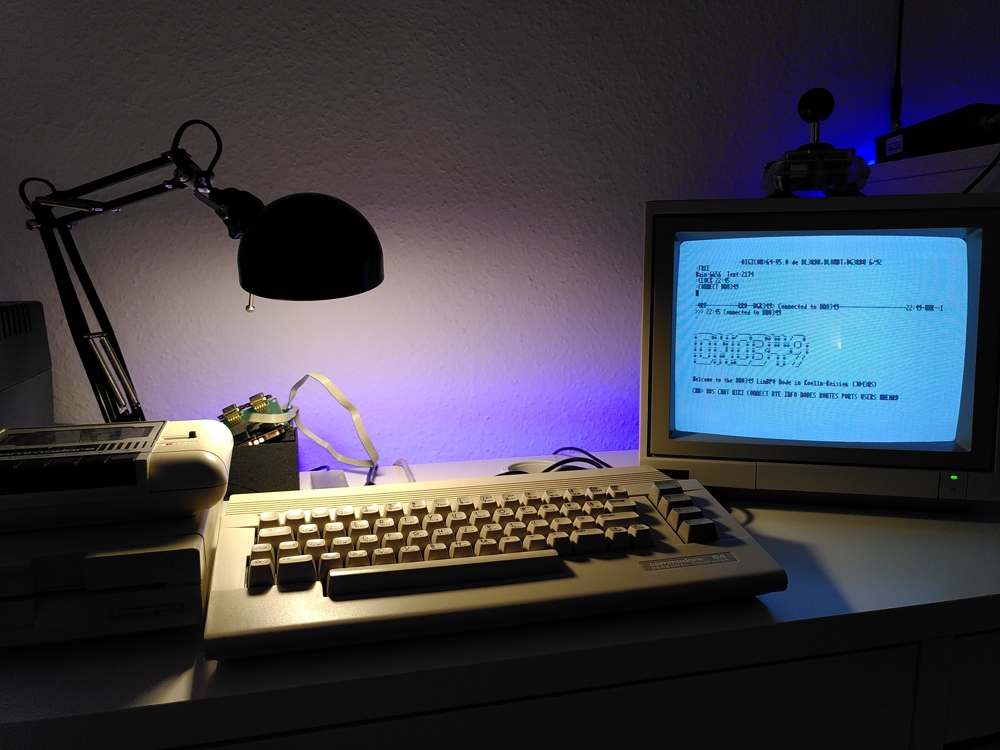
After loading the software (typically from disk or modern SD solutions such as SD2IEC), the user is greeted with a clear and functional terminal offering the following features:
- Terminal mode for directly connecting with other stations
- Mailbox access via classic Packet Radio BBS (PBBS)
- Monitor mode to observe radio traffic
The operating concept is based on classic TNC commands. The screen runs in 80-column mode by default. Despite the computer’s limited resources, Digicom runs surprisingly stable and fast.
Conclusion
Using the C64 for packet radio is more than just a nostalgic experiment. The combination of DIGICOM>64 hardware and Digicom Terminal Software demonstrates that classic computers can still have practical applications todaym and that amateur radio is an ideal field for bringing old technology back to life. Anyone interested in digital radio operations and who also loves retro computers will find a perfect blend of both worlds here.